

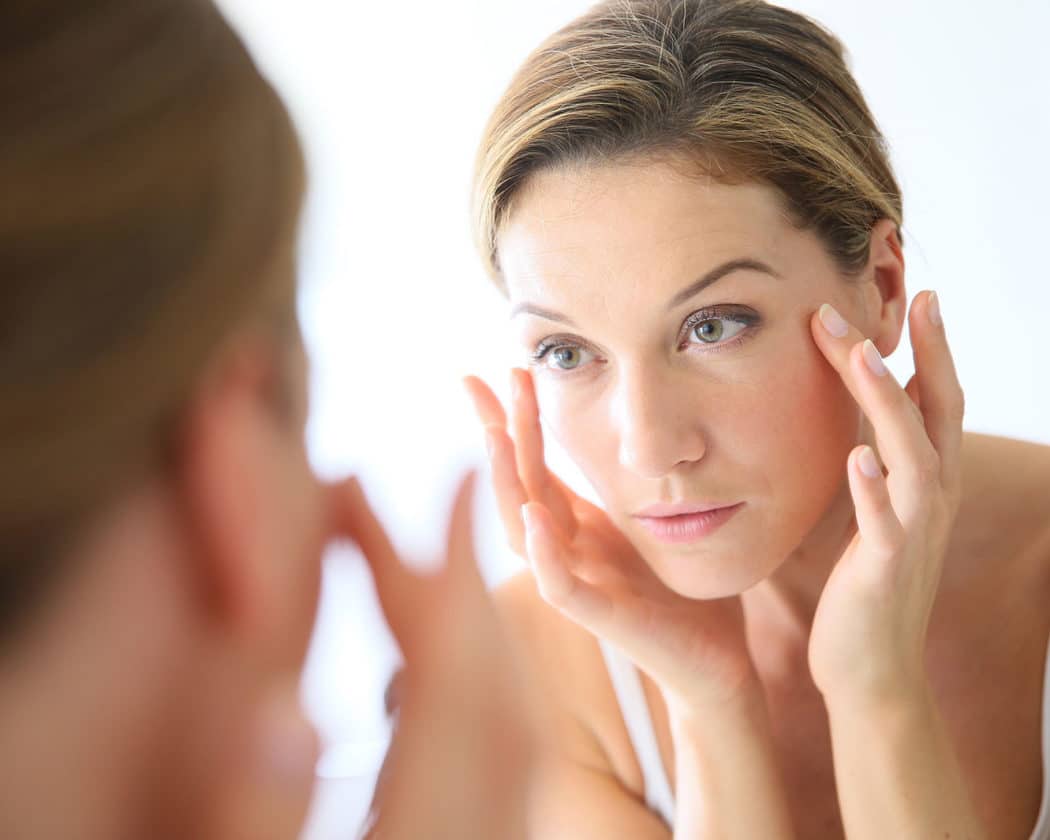
Why Use Fish Oil For Skin Health
How does smooth, resilient, youthful skin sound to you?
If you want beautiful, healthy skin, you need Omega-3s in your diet.*
- Eating lots of seafood, pastured eggs and grassfed meat can help you get closer to the amount needed. And diet is certainly the best place to start.
But even with an excellent diet, it’s hard to get enough.
- That’s why so many people concerned about their skin health use fish oil supplements. Supplement with Omega-3-rich fish oil for skin health and you’ll love what you’ll see in the mirror.*
How do we know this works?
In part because we see it in practice . . . Aestheticians make up one of our largest groups of professional customers. They have their clients use our fish oil supplements to help them achieve smooth, flawless skin that glows with health from the inside out.
Because it works so well, they keep coming back for more. Emerging research confirms what their happy clients are seeing . . .
Fish Oil’s Omega-3s Work Wonders Beneath Your Skin’s Surface
Throughout your body, Omega-3s, particularly EPA, competes with the Omega-6 fatty acid arachidonic acid (AA) for receptor sites. By doing so it helps keep the body’s inflammatory response healthy and balanced. *
- No less than 10 clinical studies have shown that thanks to its role in a healthy inflammation response, Omega-3 supplementation can help people worried about their skin maintain clear, beautiful skin.1*
Omega-3s moderating influence in the body may also explain how taking Omega-3 fish oil for skin health may delay sunburn after UV exposure.*
- In 3 clinical trials, when people upped their Omega-3 intake through supplementation (anywhere between 2.8 g to 5 g) it seemed to help strengthen their skin’s healthy resistance to sunburn.2*
Sounds good, huh?
But let’s dig a little deeper . . . Let’s look at how Omega-3s may be impacting the structure of your skin . . .
In 2005 a group of Korean researchers conducted two experiments on skin and Omega-3s – one testing skin cells in petri-dishes and the second using human volunteers.
And they found that when they applied the Omega-3 EPA directly onto skin after the skin was exposed to UV rays, the skin continued to function in a healthy, beautiful way.
- Enzymes that ordinarily would appear and start destroying the collagen of the skin after UV exposure did not emerge.
Nope, the skin kept humming along – healthy and beautiful – with no interference from these collagen-eating enzymes.*
- Better yet, a whole other set of enzymes started to become more active . . . Enzymes linked to increasing production of collagen, fibrin and elastin in the skin started to show up.3*
Now it’s important to note this experiment involved slathering the skin with Omega-3 oil. It’s a great study for confirming why a sardine-oil skin cream might work – if you can stand the smell! But when it comes to supplementation, it doesn’t necessarily prove anything. This research just suggests possibilities.
That being said, we know supplementation can deliver Omega-3s to the skin.
- In one of the sunburn studies mentioned above, when people supplemented with 4 g of EPA over 3 months, they saw an 8-fold increase in EPA in the skin. So with supplementation, your skin is getting more Omega-3s – perhaps enough to make a difference.
Clearly we have more research to do to understand how fish oil helps the skin. However, you can’t argue with the confidence-boosting, beautiful results many of our customers see with their skin when they start using our fish oil regularly.*
Ready to see what Omega-3-rich fish oil can do for your skin? Our Ultra-Concentrated Omega-3 Fish Oil gives you lots of EPA along with a good supply of DHA. And if you feel the need for some extra EPA-power when it comes to keeping your skin’s inflammation response normal*, try our ultra-pure EPA 500.
I really believe that this product has assisted providing healthier skin. My friend recommended your fish oil product, which I was skeptical about at first. I figured what have I got to lose. After 3-4 months of using your fish oil twice a day I have definitely seen results. Along with this added supplement I’ve also decided to eliminate dairy in my diet. Combining these changes in my everyday diet has amazed me with the results. Thank you so much for letting me gain my confidence again!
Chad B. Florida
Check out these two great ways to take fish oil for skin health below:
-
Ultra Concentrated Omega-3
Regular price $39.99Regular priceUnit price per$0.00Sale price $39.99 -
Vegan Omega-3
Regular price $25.99Regular priceUnit price per$0.00Sale price $25.99


Skin Health FAQ
How does Omega-3 help maintain skin hydration and elasticity?
Your skin is the largest organ on your body, so it’s important to take care of it. Increasing your consumption or supplementing Omega-3s is one way to do that.
Omega-3s have anti-inflammatory properties, which may help address inflammatory skin diseases, such as contact hypersensitivity, atopic dermatitis, and psoriasis [1]. These same anti-inflammatory properties may help improve the appearance of your skin, even if you’re not dealing with an inflammatory condition.
Beyond Omega-3 supplements, maintaining skin hydration and elasticity comes down to supporting the structural proteins in your skin drinking plenty of water.
Can fish oil reduce redness or support a healthy skin barrier?
Taking fish oil may help support a healthy skin barrier and reduce redness. Because the Omega-3s in fish oil have anti-inflammatory properties, taking fish oil may help make your skin look less puffy and red [2]. It may also help fight the skin irritation that comes along with inflammation.
If you don’t like to consume fish oil but want the benefits for your skin, you can try Omega-3 supplements that don’t have that fishy taste.
Does Omega-3 deficiency cause dry or flaky skin?
Many people do not get enough Omega-3 fatty acids through their diets, which is concerning since these nutrients are essential for brain, eye, and heart health. But Omega-3 deficiency doesn’t just affect those parts of the body—it can also affect the skin.
An Omega-3 deficiency may include skin-related symptoms like dry and flaky skin [3]. If you notice dryness, itchiness, or flaking of your skin, consider increasing the Omega-3s in your diet or taking a supplement. It’s also a good idea to address dry skin by applying thick moisturizers, using gentle cleansers, and applying SPF to protect your skin.
Is EPA or DHA more beneficial for clear skin?
Both EPA and DHA are essential Omega-3 fatty acids. You need both in your diet or through supplements to stay healthy. In terms of the effect on your skin specifically, EPA may be the more beneficial Omega-3. However, research suggests that Omega-3s together can reduce skin inflammation, dryness, and itching [4].
Further studies show DHA and EPA can reduce the skin inflammatory response and help maintain skin health [5]. For example, hitting target levels of Omega-3s is associated with significantly improved acne symptoms [6].
Sources
- Sawada, Y., Saito-Sasaki, N., Nakamura, M. (5 February 2021). Omega 3 Fatty Acid and Skin Diseases. Frontiers in Immunology. Retrieved February 3, 2026, from https://pmc.ncbi.nlm.nih.gov/articles/PMC7892455/
- Zivkovic, A., Telis, N., German, J. B., Hammock, B. D. (22 May 2014). Dietary Omega-3 fatty acids aid in the modulation of inflammation and metabolic health. California Agriculture. Retrieved February 3, 2026, from https://pmc.ncbi.nlm.nih.gov/articles/PMC4030645/
- Omega-3 Fatty Acids. National Institutes of Health: Office of Dietary Supplements. Retrieved February 3, 2026, from https://ods.od.nih.gov/factsheets/Omega3FattyAcids-HealthProfessional/
- Niseteo, T., Hojsak, I., Ožanić Bulić, S. Pustišek, N. (24 August 2024). Effect of Omega-3 Polyunsaturated Fatty Acid Supplementation on Clinical Outcome of Atopic Dermatitis in Children. Nutrients. Retrieved February 3, 2026, from https://pubmed.ncbi.nlm.nih.gov/39275147/
- Nip, J., Hermanson, K., Lee, J. (24 April 2025). n-3 PUFAs docosahexaenoic acid and eicosapentaenoic acid are effective natural pro-resolution ingredients for topical skin applications. International Journal of Cosmetic Science. Retrieved February 3, 2026, from https://pubmed.ncbi.nlm.nih.gov/40274542/
- Guertler, A. et. al. (10 July 2024). Exploring the potential of Omega-3 fatty acids in acne patients: A prospective intervention study. Journal of Cosmetic Dermatology. Retrieved February 3, 2026, from https://pubmed.ncbi.nlm.nih.gov/38982829/
