


Worried About Heart Health? Omega-3 Supplements Like These Can Make a Difference!
When it comes to heart health, Omega-3 supplementation has been proven to make a significant difference.*
In 2017, after reviewing 20 clinical studies on Omega-3 supplementation and heart health, The American Heart Association issued a scientific advisory sustaining its long-standing recommendation:
If you’re worried about your heart, Omega-3s can make a difference in keeping it healthy.1*
The World Health Organization concluded after looking at data collected from 51 different European countries that
- One of the top 5 indicators for excellent heart health is having high levels of Omega-3s in your diet.*2
Omega-3s help your heart and circulatory system in a number of ways: when taken with a healthy diet and exercise, clinical evidence shows Omega-3s
- Help maintain healthy triglyceride levels*
- Keep your body’s inflammation response normal*
- Maintain blood pressure within the healthy range*
- Keep blood clotting properly*
- Help keep your heart beating at a steady rhythm.*
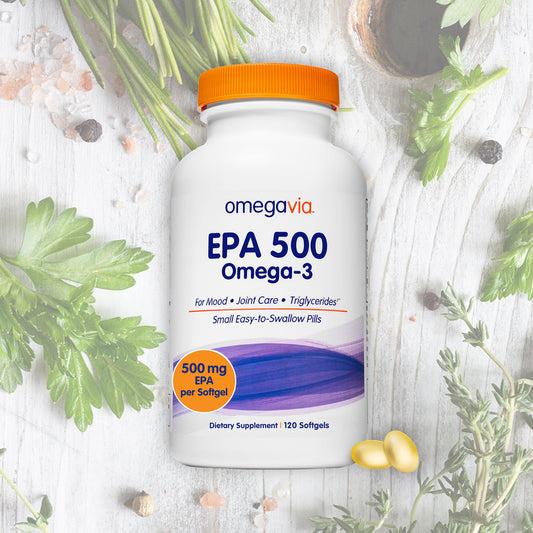
Want to give your heart the nutrition it needs? Our Ultra-Concentrated Omega-3s or our EPA 500 will serve you well. From triglyceride management to blood pressure, when it comes to heart health, Omega-3 supplements like these – when combined with a healthy diet and exercise – provide powerful support.*
Your product is great. No fishy odor or taste. Well tolerated. Works well. In addition to maintaining triglycerides, my patients have noticed improved joint comfort.* Please send additional samples.
Dr. Susan Lee M.D. North Yarmouth, Maine
Check out these heart healthy Omega-3s below
-
Ultra Concentrated Omega-3
Regular price $39.99Regular priceUnit price per$39.99Sale price $39.99 -
Vegan Omega-3 Softgels
Regular price $25.99Regular priceUnit price per$25.99Sale price $25.99


Heart Health FAQ
How does EPA support healthy triglyceride levels?
Research suggests that taking the Omega-3 fatty acids EPA and DHA together can significantly lower triglyceride levels1. Why does that matter? High triglyceride levels can be a risk factor for cardiovascular disease, which is related to incidents like stroke and heart attack.
The Omega-3 fatty acids found in fish oil (like EPA and DHA) can help and are more viable solutions than alternatives like flaxseed oil. The problem with flaxseeds is that they largely contain ALA Omega-3, which the body can't absorb directly. Omega-3s from fish oil pack a more powerful punch.
Is fish oil effective for maintaining healthy cholesterol?
While fish oil doesn't significantly impact cholesterol levels, it can support good overall cardiovascular health. OmegaVia supplements for heart health contain 300 to 1,135 mg of Omega-3 fatty acids.
The EPA and DHA Omega-3 fatty acids found in fish oil have been shown to lower triglycerides—a type of fat in your blood that, when elevated, increases your risk of heart disease and stroke [1]. For comprehensive cardiovascular support, fish oil is still worth taking.
What is the recommended daily dose of Omega-3 for cardiovascular support?
It depends on your cardiovascular health status. People with heart-related health conditions might benefit from a higher dosage of Omega-3 fatty acids–1,000 mg per day [2].
For high triglycerides specifically, clinical research indicates you need approximately 3,000 mg of EPA and DHA daily [1].
Should I take EPA 500 or Ultra Concentrated for heart health?
Both products support cardiovascular health, but they're formulated differently for different needs. EPA 500 provides 500 mg of pure EPA per softgel and is designed for daily heart health, joint support, and mood balance.
Ultra Concentrated provides 1,135 mg of total Omega-3s per softgel (both EPA and DHA combined), making it one of the most concentrated fish oils available. With Ultra Concentrated, you only need three pills daily to reach the clinically researched dose of about 3,000 mg Omega-3s for triglyceride support—compared to ten pills with typical retail fish oil.
These statements have not been evaluated by the Food and Drug Administration. This product is not intended to diagnose, treat, cure, or prevent any disease. Consult your healthcare provider before adding any supplement to your diet.
Sources
- Skulas-Ray, A., et al. (15 December 2010). Dose-response Effects of Omega-3 Fatty Acids on Triglycerides, Inflammation, and Endothelial Function in Healthy Persons with Moderate Hypertriglyceridemia. The American Journal of Clinical Nutrition. Retrieved February 3, 2025, from https://pmc.ncbi.nlm.nih.gov/articles/PMC3138218/
- Berryhill, D. (17 April 2024). Omega-3 Dosages: How Much Should You Take Per Day, and How Much is Too Much? GoodRx. Retrieved February 4, 2026, from https://www.goodrx.com/Omega-3-acid-ethyl-esters/Omega-3-dosages
