

Omega-3 Fish Oil For Eyes – Aging Eyes, Dry Eyes And Eye Fatigue
Our eyes need Omega-3s. Use Omega-3 fish oil for eyes – dry eyes, tired eyes, aging eyes, young eyes – and you’ll SEE the difference.
Multiple Clinical Studies Prove Omega-3s From Fish Oil Are Critical For Eye Health
The NIH’s groundbreaking eye nutrition study – AREDS 2 – put Omega-3s squarely on the map for eye health as we age.1 Since then a number of studies have confirmed Omega-3s can help keep us keep our vision sharp as we hit our golden years.*
But it’s not just for older people . . .
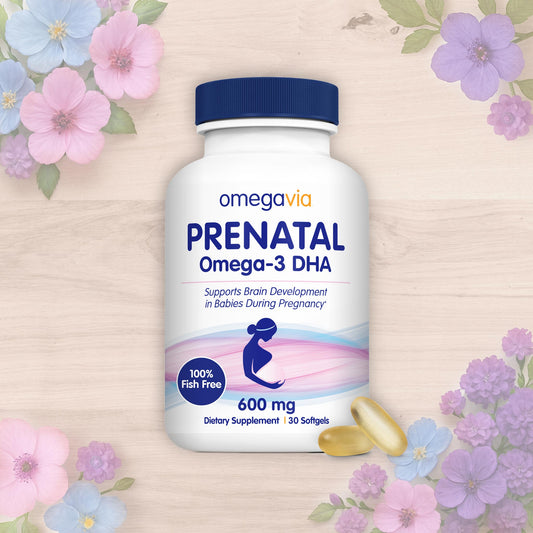
- Pregnant moms are advised to take supplemental DHA to help with fetal eye development as well. *
- And the importance for vision continues after birth . . . In one study researchers found 4-year-olds who had not breastfed had vision on par with breastfed children if they had the Omega-3 DHA added to their formula. The non-breastfed children who didn’t have this supplement had consistently poorer vision.2 *
How do fish oil’s Omega-3s help your eyes?
- The Omega-3 DHA makes up 30% of the fatty acids in the photoreceptors of your retina. Get enough of it and your body can keep this essential part of your eye in tip-top shape.3*
- In addition, the Omega-3 EPA may help maintain healthy inflammation and immune response to protect the eye.4 *
If dry eyes are bothering you,
- A review of 17 clinical trials concluded that Omega-3 supplementation can offer effective relief.5 *
- Omega-3s may help improve the quality of the oily film our eyelids produce for lubrication.6 *
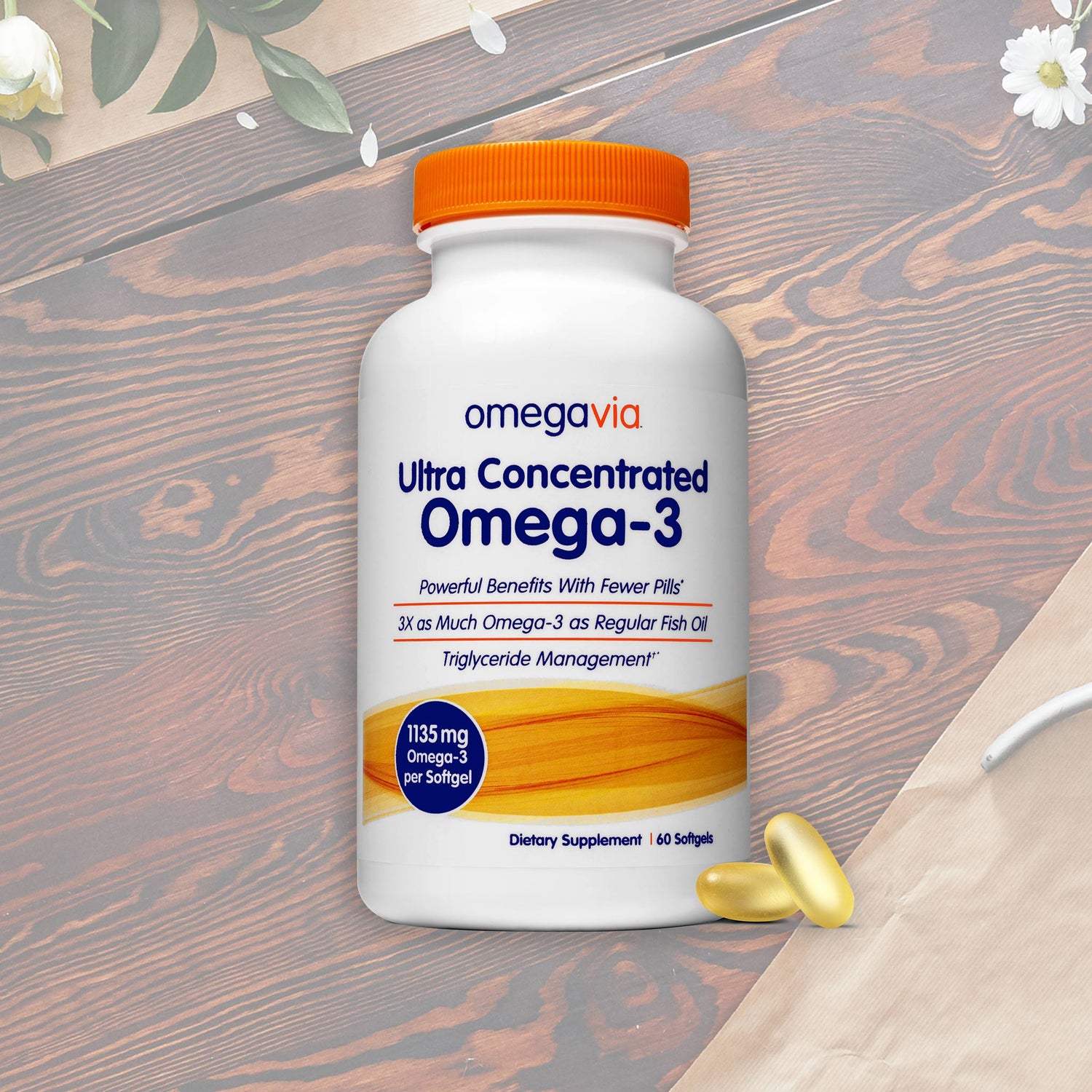
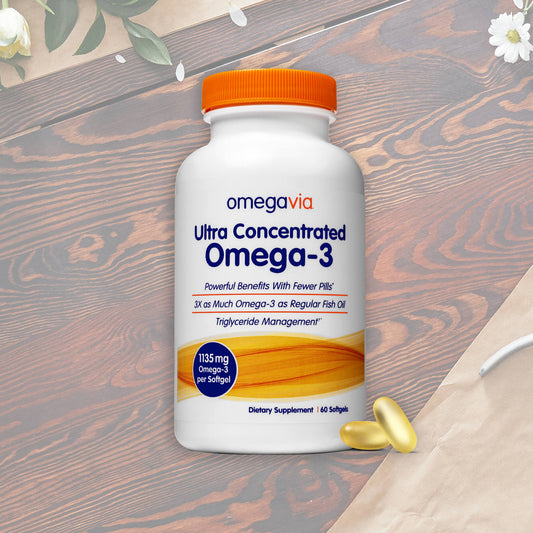
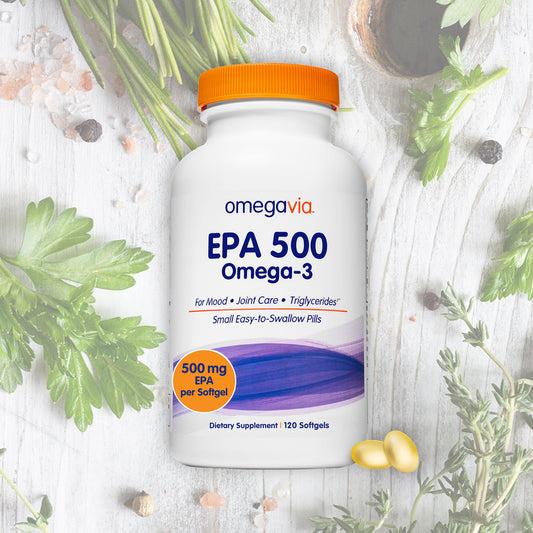
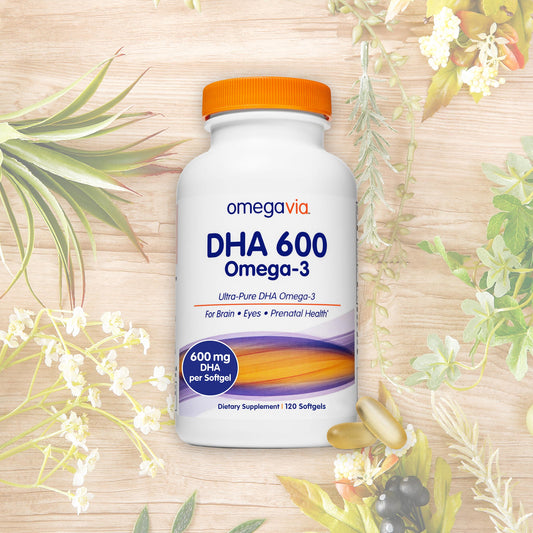
So, if you’re looking for an Omega-3 fish oil for eyes in general as well as eye strain and dry eye, you’ve found it here. OmegaVia’s Ultra-Concentrated Omega-3s gives you plenty of DHA and EPA in every pill. Our DHA 600 gives you an extra boost of DHA. And if maintaining a normal inflammation response is a goal, EPA 500 may offer the targeted nutrition you need.*
I have very dry eyes which makes it hard to wear my contacts so I decided to take fish oil pills to fix the issue, I took normal fish oil vitamins that are sold at local retail stores and did not notice a different, within one week of taking Omega Via I noticed a significant change in the moisture in my eyes, I am extremely happy and satisfied with this product that I put my order on automatic shipment!*
Nousheen Khan-Memon
Check out our fish oil Omega-3s for eyes below:
-
Ultra Concentrated Omega-3
Regular price $39.99Regular priceUnit price per$39.99Sale price $39.99 -
Kid's Omega-3 Chewies
Regular price From $25.99Regular priceUnit price per -
Prenatal Omega-3 DHA
Regular price $24.99Regular priceUnit price per

Eye Health FAQ
How does DHA support retinal function and long-term vision?
DHA is packed into photoreceptor cell membranes in the eye—in fact, a whopping 93% of Omega-3s in the retina are DHA, which plays a critical role in visual signal transmission. Research shows it helps maintain healthy retinal blood vessels and protects eye tissue from oxidative stress [1].
On top of that, studies suggest that higher DHA intake is associated with healthier retinal function as you age [2]. As you get older, maintaining adequate DHA levels becomes even more important for preserving vision. Because your body can't produce DHA efficiently, it has to come from what you eat or from supplements.
Can Omega-3 supplements help with dry eye symptoms?
Yes, research shows that Omega-3 supplementation significantly improves dry eye symptoms [3]. In trials with mild-to-moderate dry eye patients, those taking EPA+DHA saw marked improvements in tear secretion, tear film stability, and dry eye symptom scores [4,5].
Continuing to take Omega-3 supplements after LASIK surgery can help manage the associated dry eye symptoms [6].
How does it work? Omega-3s reduce inflammation on the eye's surface and improve the function of the meibomian glands, which are responsible for producing oils to keep your tears from evaporating too quickly [7]. If you struggle with that gritty, irritated feeling from dry eyes, Omega-3s can help by restoring balance to your tear film.
What is the difference between EPA and DHA for eye health?
EPA and DHA are both Omega-3 fatty acids that support good eye health, especially when taken together. DHA is the primary Omega-3 in your retina, making it essential for maintaining photoreceptor cells and visual function. EPA plays more of a supporting role, providing anti-inflammatory benefits.
Together, EPA and DHA can alleviate oxidative stress-related damage in the eye, protecting the retina as you age and safeguarding against diseases like macular degeneration [8]. Research also suggests that supplementary EPA plus DHA taken daily produces significant improvements in dry eye symptoms [9].
Does fish oil help with eye strain from digital screens?
If you've ever spent a long day staring at a screen only to come away with tired, dry, gritty eyes, you know how frustrating digital eye strain can be. The problem isn't going away—we're all staring at screens more. But Omega-3s can help.
One reason our eyes feel fatigued after extensive screen time is a reduced blink rate. Blinking helps maintain moisture in the eye—but screen time reduces blink rate. The solution is to preserve moisture. Research suggests that Omega-3 supplementation can help improve tear film stability and alleviate dry eye strain [10].
These statements have not been evaluated by the Food and Drug Administration. This product is not intended to diagnose, treat, cure, or prevent any disease. Consult your healthcare provider before adding any supplement to your diet.
Sources
- Shindou, H., et al. (3 June 2017). Docosahexaenoic Acid Preserves Visual Function by Maintaining Correct Disc Morphology in Retinal Photoreceptor Cells. The Journal of Biological Chemistry. Retrieved February 3, 2025, from https://pmc.ncbi.nlm.nih.gov/articles/PMC5519357/
- SanGiovanni, J., et al. (24 January 2005). The Role of Omega-3 Long-chain Polyunsaturated Fatty Acids in Health and Disease of the Retina. Progress in Retinal and Eye Research. Retrieved February 3, 2025, from https://pubmed.ncbi.nlm.nih.gov/15555528/
- Wang, W., et al. (10 November 2023). Efficacy of Omega-3 Intake in Managing Dry Eye Disease: A Systematic Review and Meta-Analysis of Randomized Controlled Trials. Journal of Clinical Medicine. Retrieved February 3, 2025, from https://pubmed.ncbi.nlm.nih.gov/38002640/
- Kangari, H., et al. (1 May 2013). Short-term Consumption of Oral Omega-3 and Dry Eye Syndrome. Ophthalmology. Retrieved February 3, 2025, from https://pubmed.ncbi.nlm.nih.gov/23642375/
- Epitropoulos, A., et al. (September 2016). Effect of Oral Re-esterified Omega-3 Nutritional Supplementation on Dry Eyes. Cornea. Retrieved February 3, 2025, from https://pubmed.ncbi.nlm.nih.gov/27442314/
- Goyal, P., Jain, A.K., Malhotra, C. (February 2017). Oral Omega-3 Fatty Acid Supplementation for Laser In Situ Keratomileusis-Associated Dry Eye. Cornea. Retrieved February 13, 2026, from https://pubmed.ncbi.nlm.nih.gov/28060063/
- Oleñik, A., et al. (30 August 2013). A Randomized, Double-masked Study to Evaluate the Effect of Omega-3 Fatty Acids Supplementation in Meibomian Gland Dysfunction. Clinical Interventions in Aging. Retrieved February 3, 2025, from https://pubmed.ncbi.nlm.nih.gov/24039409/
- Zeppieri, M., et al. (24 December 2024). Eicosapentaenoic Acid (EPA) and Docosahexaenoic Acid (DHA): A Targeted Antioxidant Strategy to Counter Oxidative Stress in Retinopathy. Antioxidants. Retrieved February 3, 2025, from https://pubmed.ncbi.nlm.nih.gov/39857340/
- Bhargava, R., et al. (16 February 2015). Oral Omega-3 Fatty Acids Treatment in Computer Vision Syndrome Related Dry Eye. Contact Lens & Anterior Eye: The Journal of the British Contact Lens Association. Retrieved February 3, 2025, from https://pubmed.ncbi.nlm.nih.gov/25697893/
- Lem, D., et al. (27 September 2022). Can Nutrition Play a Role in Ameliorating Digital Eye Strain? Nutrients. Retrieved February 3, 2025, from https://pmc.ncbi.nlm.nih.gov/articles/PMC9570730/
